Advancing Precision Manufacturing in Medical Devices Using Automation

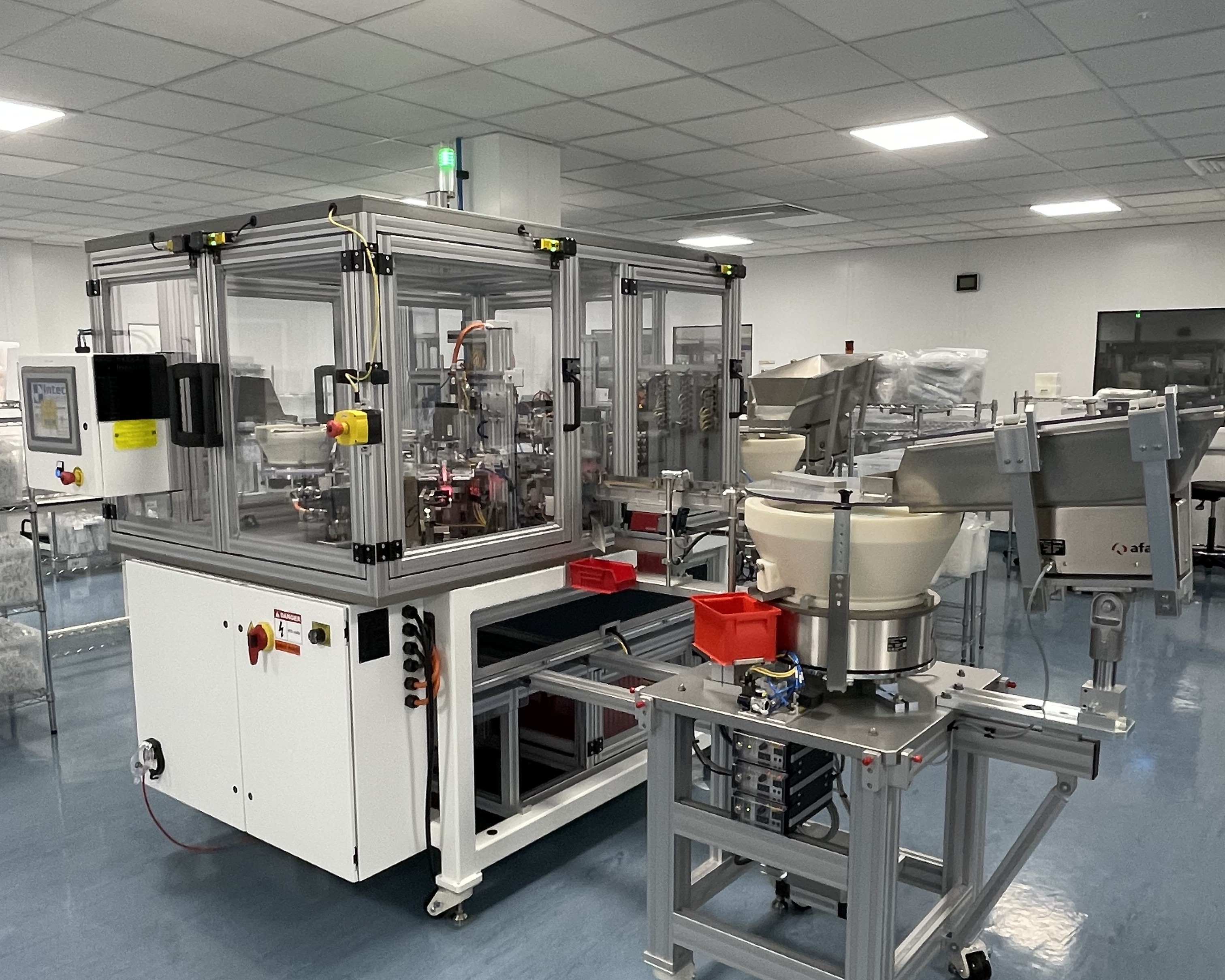
All the machines in our factory share one thing in common: their name, Bertha. Named after a factory machine in a beloved English children's cartoon from the 1980s, Bertha lives on in her 6th iteration, our newest and most advanced production machine. Designed to combine flexibility, automation, and exceptional accuracy, it’s capable of producing up to 25 different products with varying shapes and specifications, all to the highest quality standards.
The machine is primarily used for the production of cystotome cannulas, where precision is critical, but its advanced design also allows for the manufacture of other specialised components too. Despite its technical sophistication, Bertha 6 is fully automated and easy to operate during production; the operator’s main task is to place the tubes from the bag into the bowl feeder, which supplies the line leading to the first station of the machine.
Once production begins, Bertha 6 carries out a sequence of highly controlled and automated processes across seven stations:
Station 1: Tube Handling and Preparation
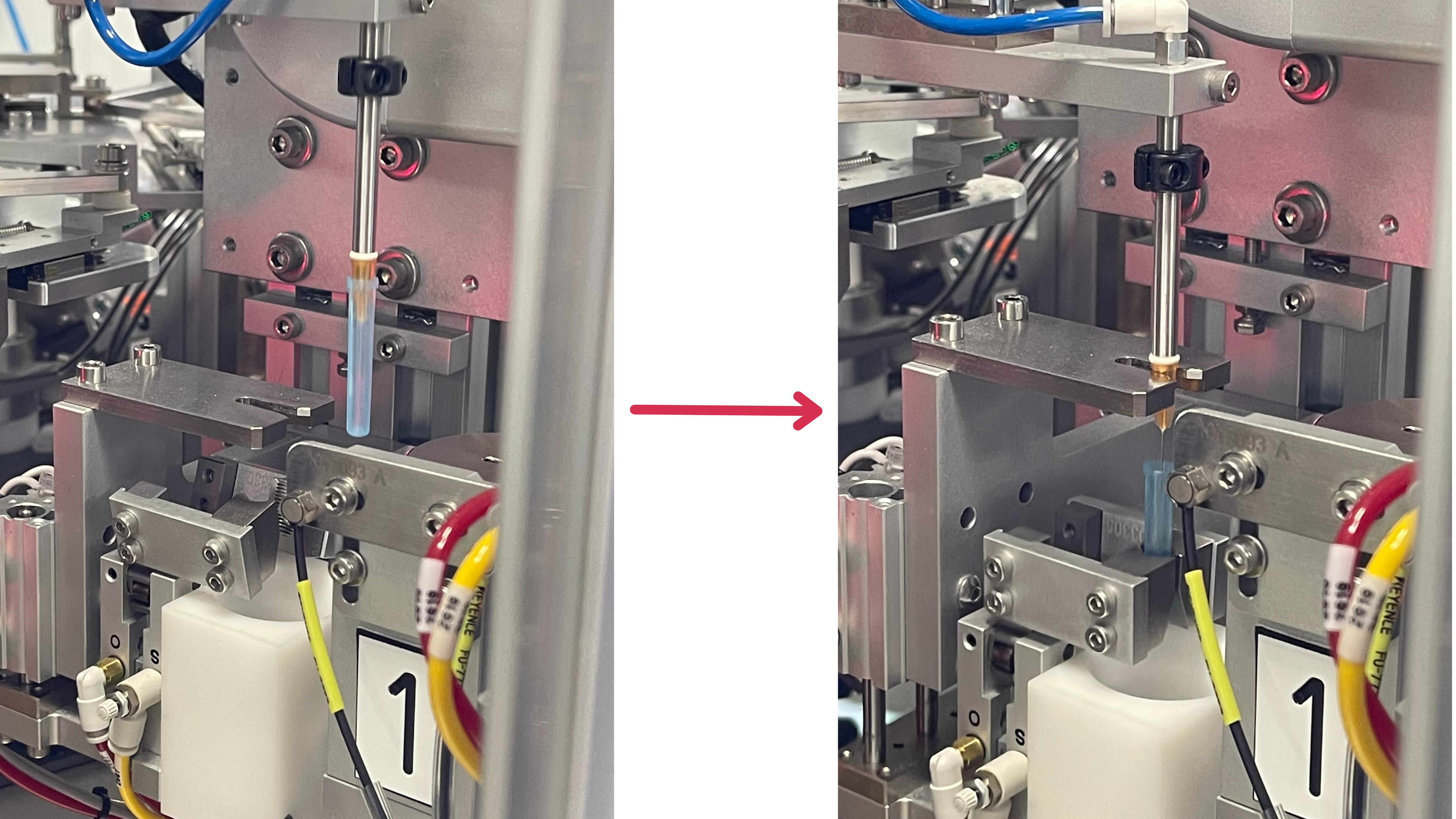
A robotic arm picks up the tube by the hub, removes and discards the protector, and then transfers the tube to the next station.
Station 2: Orientation and Alignment
At this stage, the tube is rotated by the robotic arm. A built-in camera, guided by the selected program, ensures the tube is oriented in the correct position for subsequent processes.
Station 3: Tip Bending
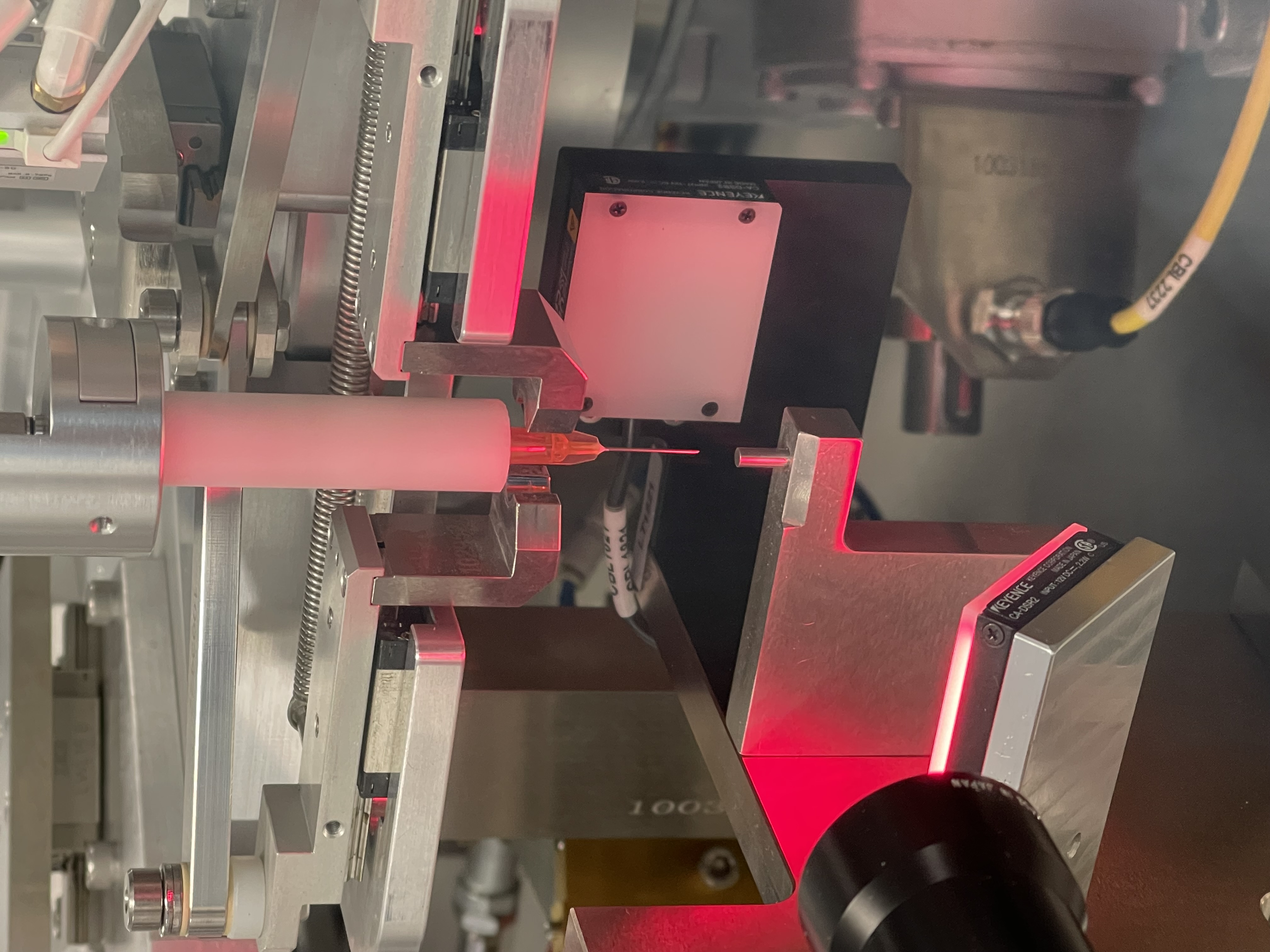
The cannula tip is bent to a precise angle as defined in the uploaded production program, ensuring consistency and repeatability across all units.
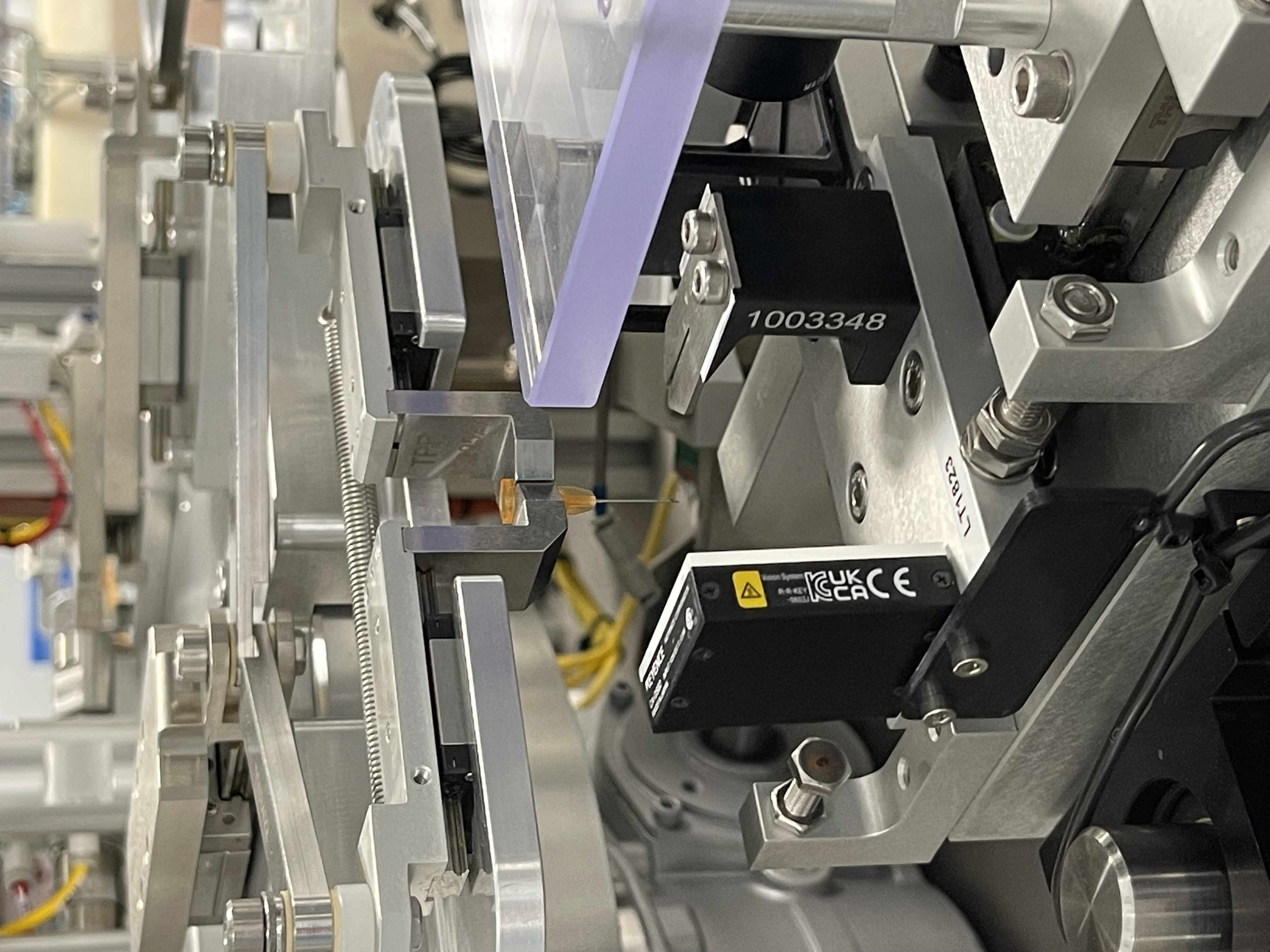
Station 4: Bend Inspection
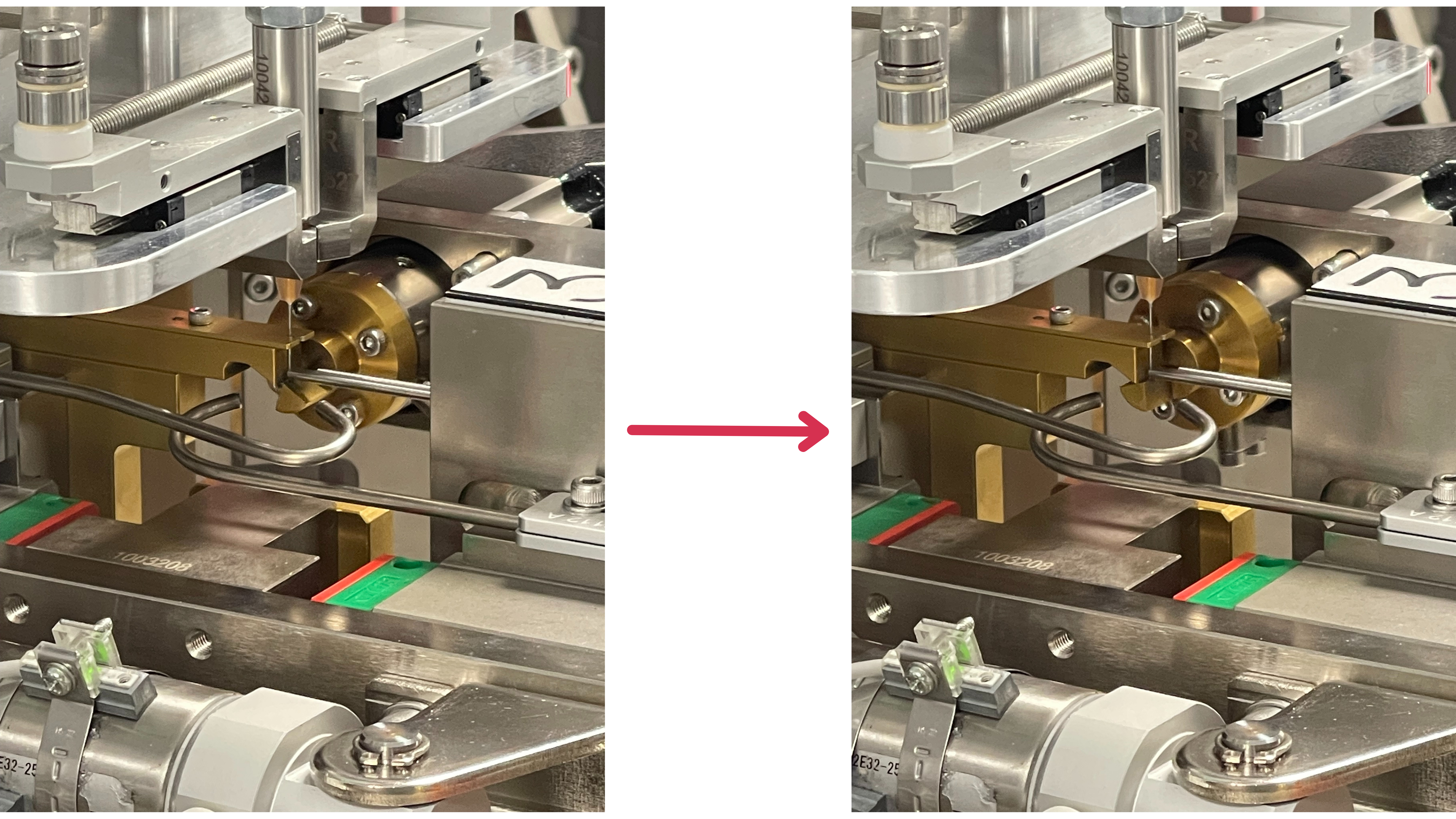
A built-in camera inspects the bent tip to verify that it meets the specified measurements. Cannulas that fall outside the defined tolerance are automatically marked for rejection at the final station.
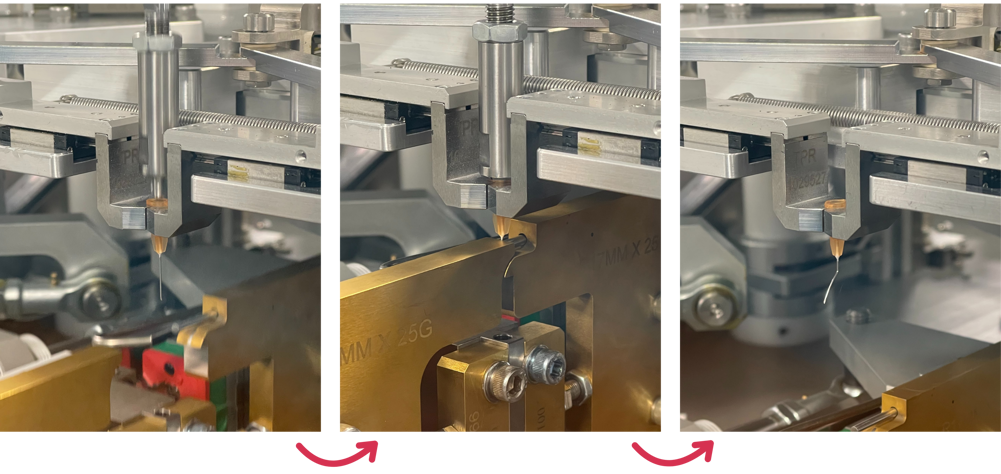
Station 5: Shape Forming
The required shape is formed on the tube according to the exact dimensions programmed into the system, maintaining tight control over product geometry.
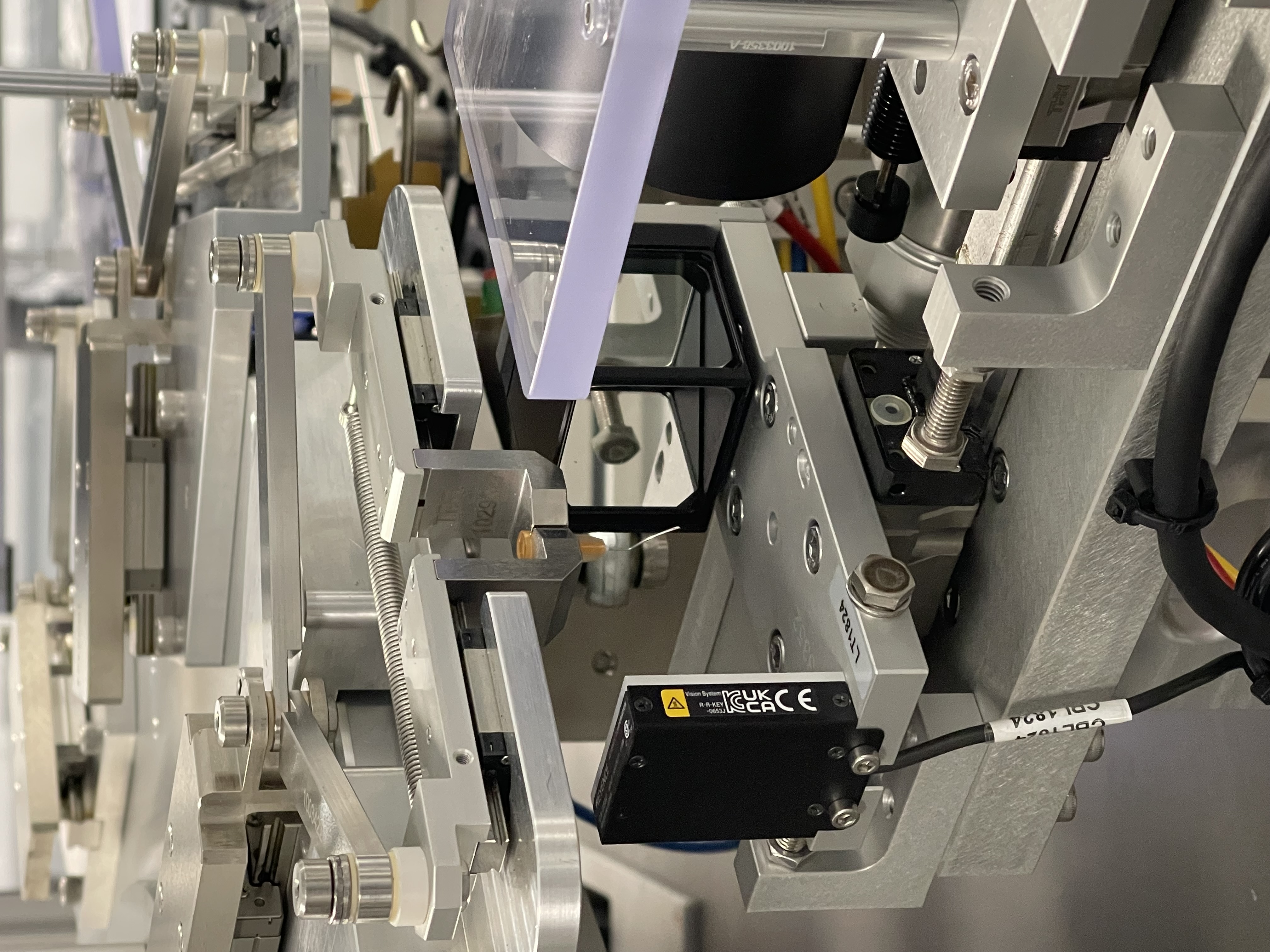
Station 6: Shape Inspection
Another camera inspection verifies the final shape of the cannula. Any product that does not meet specification is again flagged for rejection.
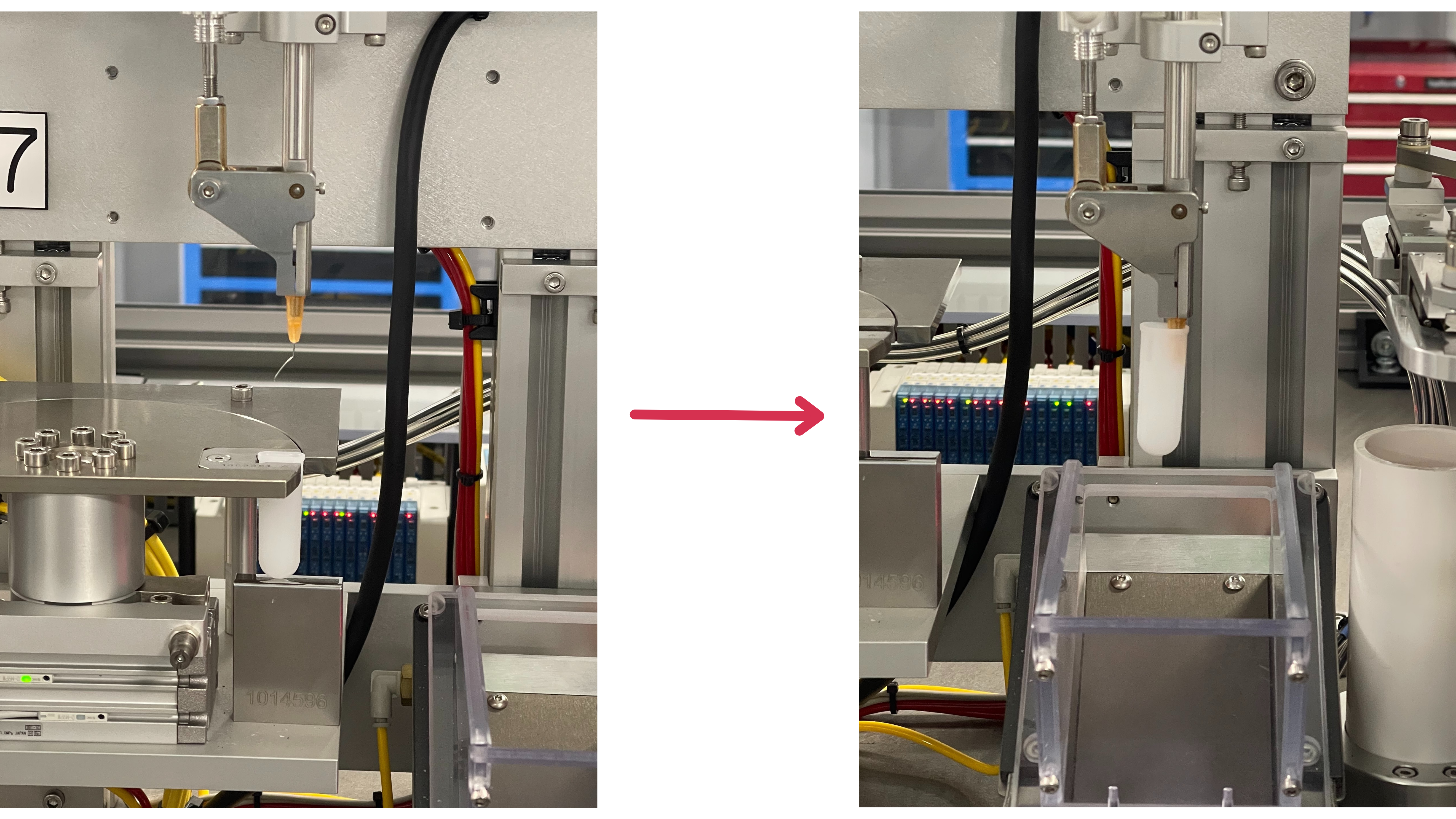
Station 7: Final Sorting and Operator Inspection
In the final station, all out-of-spec cannulas identified during earlier inspections are automatically rejected. In-spec cannulas are placed into new protectors and transferred to the pass box, where they are inspected by operators before proceeding to the final stage of the process.
Through its advanced automation, integrated vision systems, and precise control at every stage, Bertha 6 ensures consistent product quality while supporting efficient and flexible production. The machine plays a key role in maintaining our high standards for medical device manufacturing and reinforces our commitment to precision, reliability, and patient safety.