What Is a Hydrodissection Cannula? Understanding Its Role in Modern Cataract Surgery

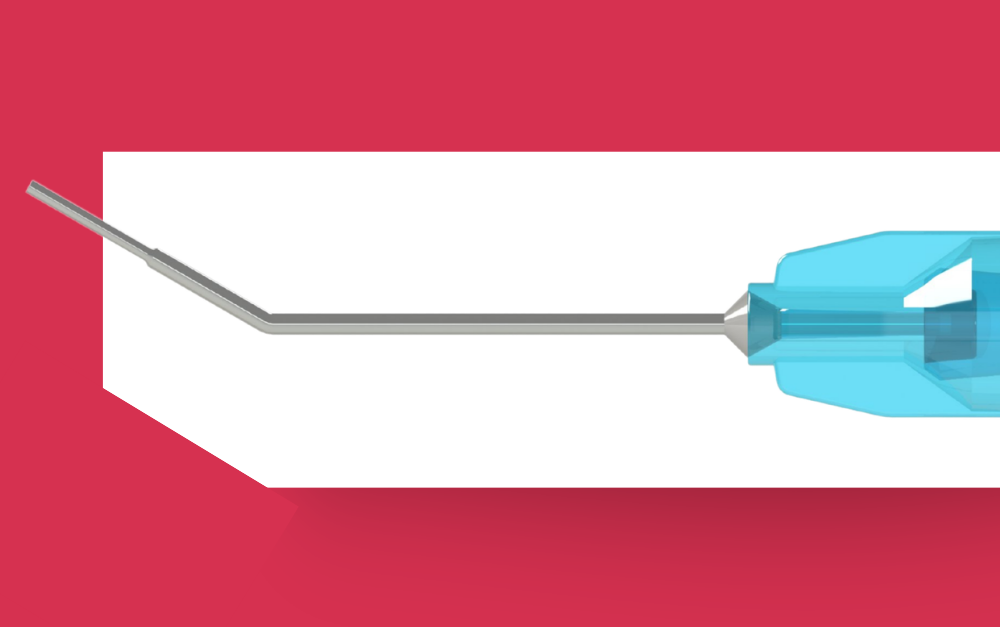
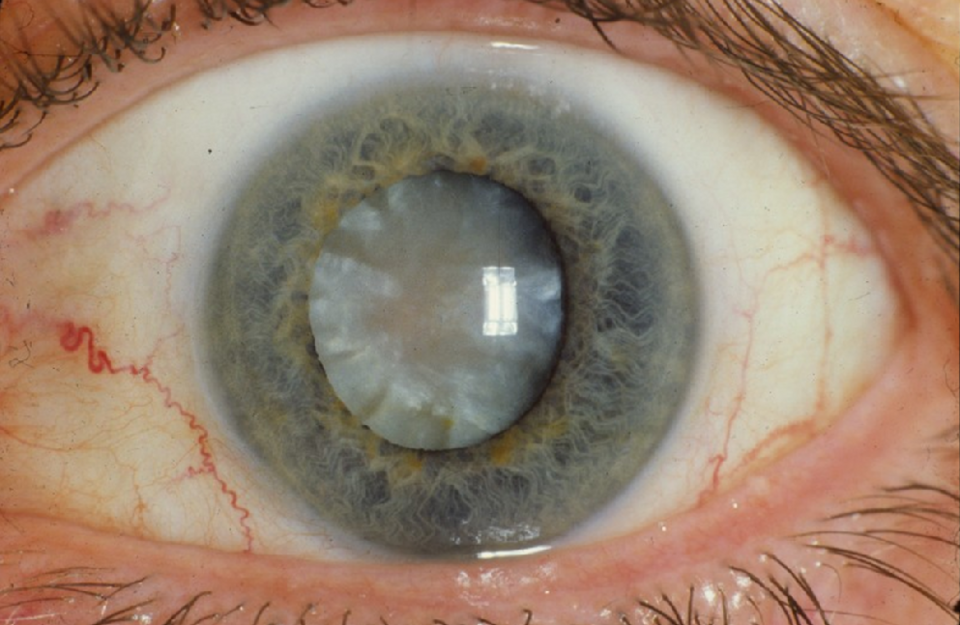
Cataract surgery is one of the most frequently performed procedures in the world, and its techniques continue to evolve. Among the essential tools used in today’s surgery is the hydrodissection cannula, designed to separate the lens matter from the capsule in preparation for phacoemulsification.
At Sterimedix, we design and manufacture a range of single-use hydrodissection cannulas used by ophthalmic surgeons around the world. This article explains what a hydrodissection cannula is, how the hydrodissection technique works in cataract surgery, and the key design features that set our cannulas apart.
The Aim of Hydrodissection in Cataract Surgery
The goal of hydrodissection is straightforward: to free the lens matter from the capsular bag so it can be safely removed while leaving the capsule intact.
A preserved capsule is essential because it:
-
Holds the intraocular lens (IOL) securely
-
Prevents the vitreous humour from falling forward into the anterior segment
-
Supports long-term visual stability
.
From Traditional Hydrodissection to Cortical-Cleaving Techniques
Traditionally, hydrodissection involved injecting fluid under the capsule and into the cortical layer, separating the lens nucleus from the cortex and capsule.
Today, however, a cortical cleaving hydrodissection technique is more popular, as described by Howard Fine in 1992, and this has become the preferred method for many surgeons.
In cortical-cleaving hydrodissection:
-
The cortex is gently separated from the capsule
-
It remains attached to the epinucleus
The advantage of this is that the cortex can be removed by phacoemulsification with the rest of the lens, which reduces the risk of capsular rupture.
While cortical-cleaving cannulas are tailored for this technique, any hydrodissection cannula can be used.
How Surgeons Use a Hydrodissection Cannula
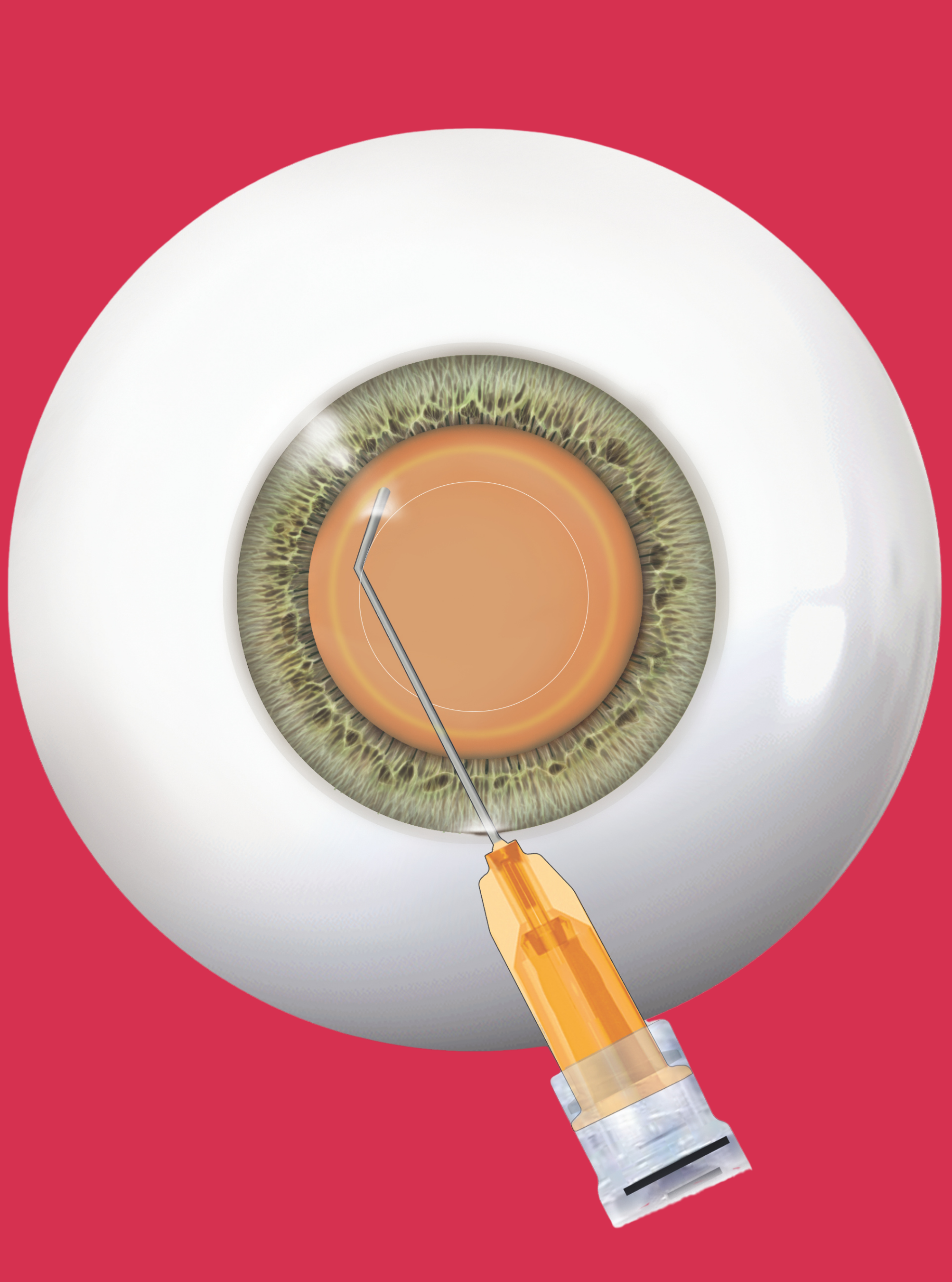
A hydrodissection cannula is attached to a luer-lock syringe filled with balanced salt solution (BSS). From there, the process involves a sequence of controlled movements:
1. Positioning
The cannula tip is placed beneath the edge of the capsulorhexis and directed toward the lens equator. The shaft is then used to gently lift the anterior capsule.
2. Injecting fluid
The surgeon injects a smooth, continuous flow of fluid. This creates a fluid wave that travels circumferentially beneath the capsule, severing the connections between the capsule and the cortex.
3. Decompression
It’s common at this stage for the lens to bulge slightly as fluid collects behind it. Using the cannula shaft, the surgeon applies gentle pressure to release this trapped fluid and prevent excess tension.
4. Confirming mobility
The lens is rotated within the bag to ensure it is fully freed. If not, the surgeon repositions the cannula with the tip towards the problem areas and repeats the injection until the lens can be freely mobilised within the bag.
Design Features and Benefits of Sterimedix Hydrodissection Cannulas
Our hydrodissection cannulas are engineered to support precise, confident performance during what is a delicate part of the cataract surgery.
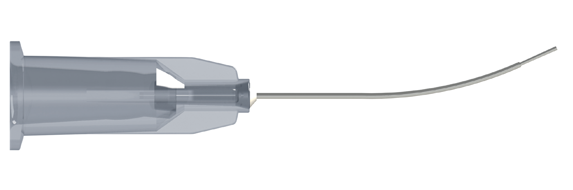
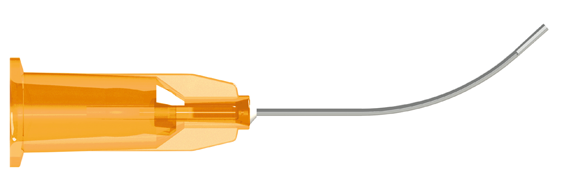
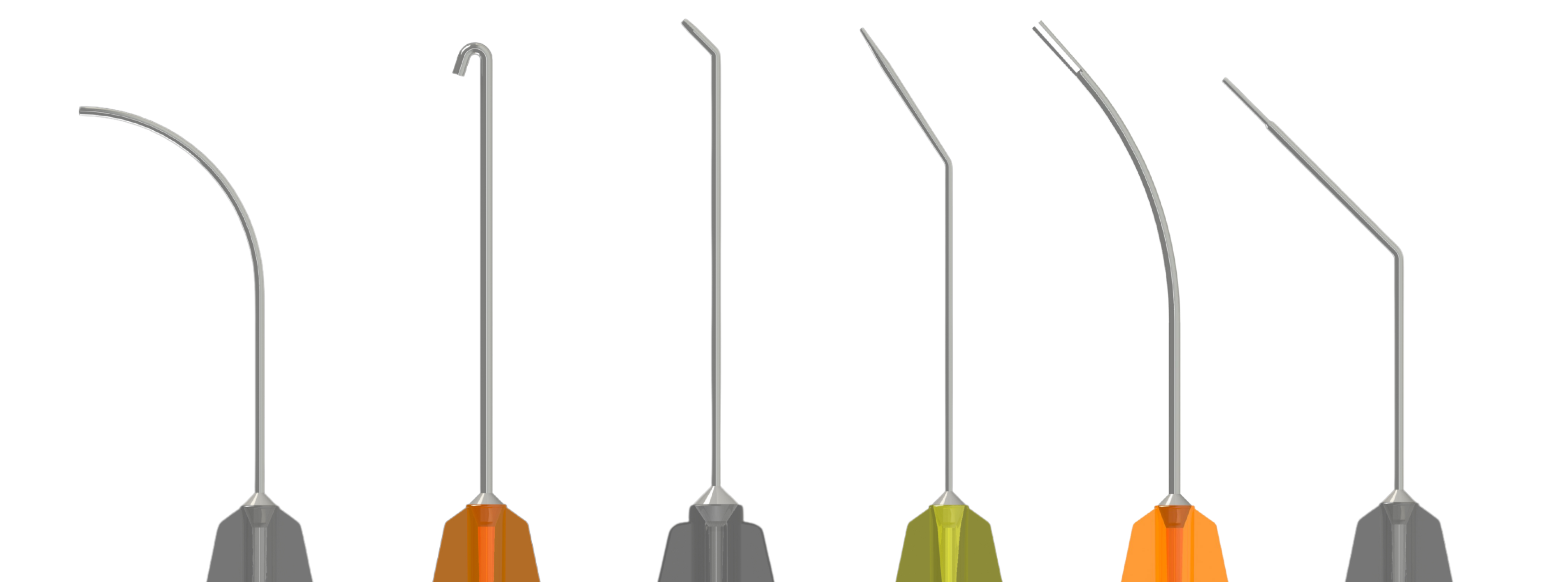
Curved or angled shaft
-
Makes injecting easier, particularly around the natural obstruction of the brow bone
-
Facilitates lifting the capsule before the injection of fluid
-
Aids in applying controlled pressure to the bulging lens to decompress
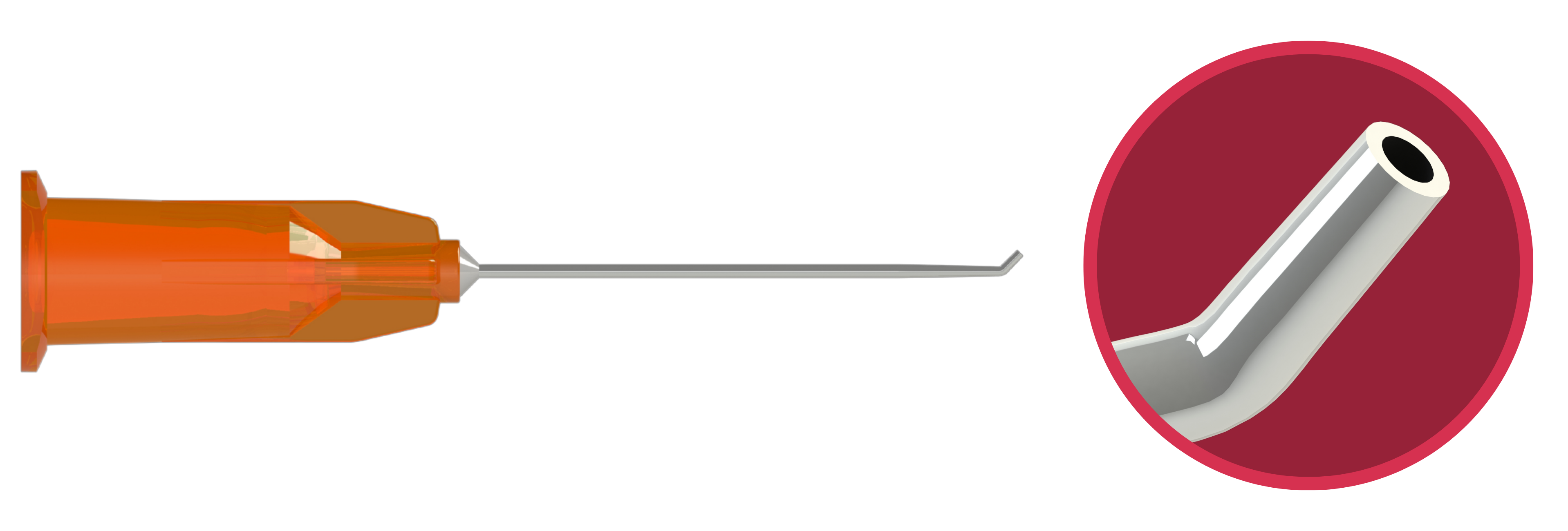
Flattened tip
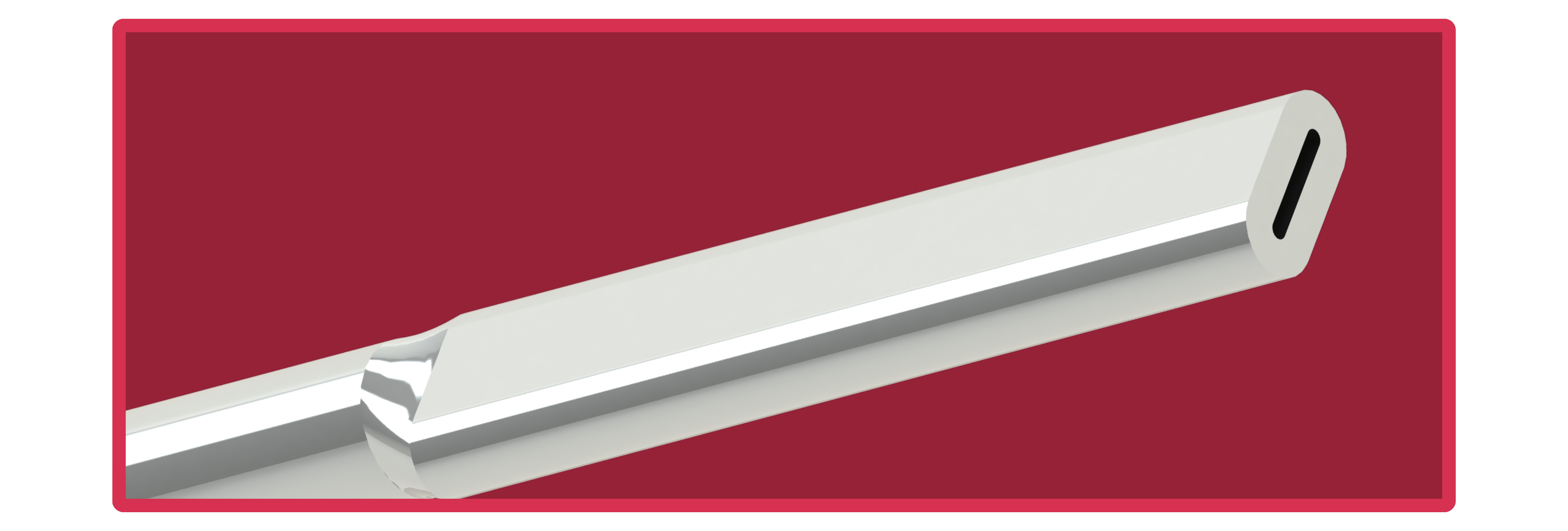
Some models include a flattened tip, which means that fluid fans out in one plane as it leaves the tip. The benefits of this are:
-
It gives more control of the flow than a round tip
-
It can be directed as required by rotating the cannula
-
It increases the pressure of fluid leaving the tip
Supporting surgeons, supporting patients
At Sterimedix, our focus is on manufacturing reliable, single-use ophthalmic instruments that support surgeons in delivering the best possible care.
Every cannula is manufactured in our cleanroom facilities in the UK and inspected to ensure consistency, sterility, and performance, reflecting our commitment to quality in every step.

Hydrodissection is a critical step in cataract surgery, enabling surgeons to separate the lens matter from the capsule before phacoemulsification.
The design of the hydrodissection cannula plays a significant role in the control and efficiency of this step.
Built on over 36 years of experience, Sterimedix hydrodissection cannulas are built to support surgical excellence and the patient outcomes that depend on it.
About Sterimedix
Sterimedix has been manufacturing single-use ophthalmic devices since 1989, making a meaningful difference in patient outcomes for over 35 years. Based in the UK town of Redditch, a place with centuries of needle-making heritage, their products are known and used globally. In a purpose-built facility, they combine traditional hand craftsmanship with cutting-edge automation and produce tens of millions of products every year in modern cleanrooms for the highest levels of safety and reliability.